magnetic field detector Circuit Diagram
magnetic field detector Circuit Diagram The A3144 Hall sensor is not only versatile, but it also has a very reasonable price. affordable, making it ideal for both beginners and experts. Designed to measure magnetic fields y detect positionsIts ease of use and compact size make it an essential component in projects that require a device with no moving parts or with low mechanical wear.
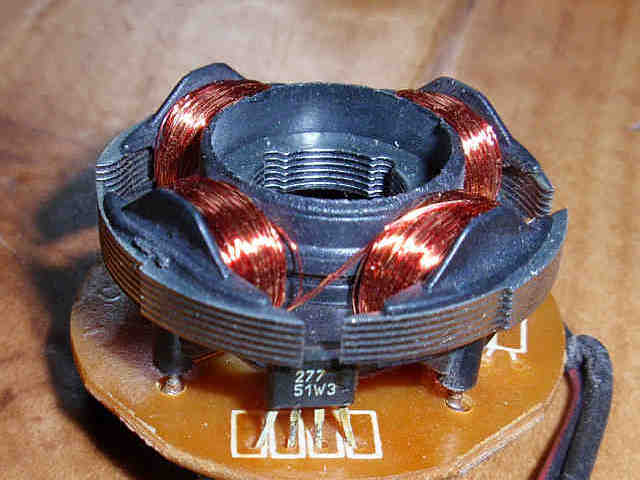
A Hall sensor is an electronic device that detects the presence and magnitude of magnetic fields. It operates on the principle of the Hall effect, which is the production of a voltage difference (Hall voltage) across an electrical conductor, transverse to an electric current in the conductor and a magnetic field perpendicular to the current.

How to Use a Hall Effect Sensor With Arduino Circuit Diagram
5. How do you use hall effect sensors? To use Hall Effect sensors, you typically follow these steps: Connect the sensor to an appropriate power supply and ground; Position the sensor in the desired location to detect the magnetic field of interest; Read the sensor's output using an Arduino, microcontroller, or other measurement devices;

The Hall effect sensor works on the principle of the Hall effect, which states that whenever a magnetic field is applied in a direction perpendicular to the flow of electric current in a conductor, a potential difference is induced. This voltage can be used to detect whether the sensor is in the proximity of a magnet or not. If the sensor does not detect a magnetic field, ensure the magnet is close enough to the sensor. Conclusion. Now you know how to detect magnetic fields using a Hall Effect sensor with your Arduino. This setup can be used as a magnetic door sensor, for RPM counting, or in any project requiring magnetic field detection. More Arduino Tutorials In this tutorial you learned how to use a hall effect sensor to detect magnetic fields and control an Arduino output. Hall effect sensors are very useful for proximity, position, and motion sensing. This is a basic example but demonstrates the core concept of using a hall effect sensor with an Arduino. There are many ways to expand on this
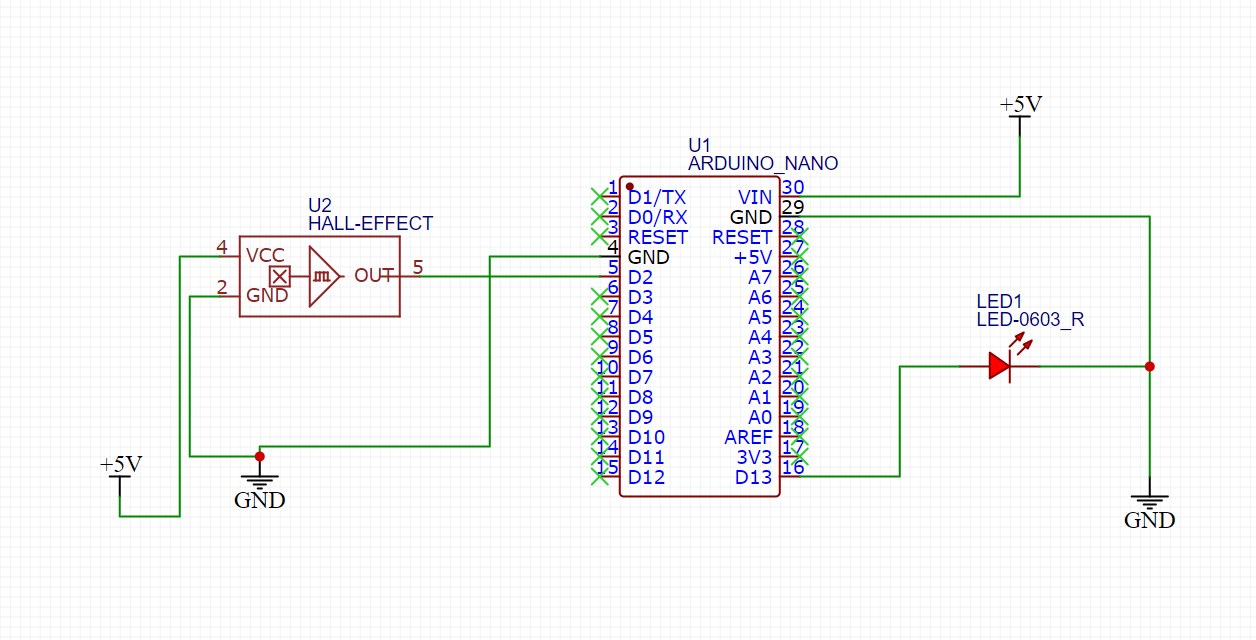
Arduino Hall Effect Sensor: How to Detect Magnetic Fields Circuit Diagram
Applications of Hall Effect Sensor for ESP32 Projects. Magnetic Switches: Use Hall effect sensor for ESP32 to detect the opening or closing of doors and windows by sensing the proximity of a magnet. Motor Position Monitoring: Measure the position of a motor shaft by detecting the magnetic field generated by magnets on the shaft. Compass Systems: Combine magnetic field readings from Hall effect In this electronics project, I will show you a Magnetic field detector using Hall-effect sensor, where the detector indicates the presence and polarity of the magnetic field, whether it is a neodymium magnet, ring magnet, or disc magnet. The operating voltage for this detector range from DC 3.7 V to 12 V and current 300 mA to 800 mA. The Hall Magnetic sensor, also known as the Hall Effect sensor, is a device used to measure magnetic fields. It works by detecting the magnetic field around it and converting that into an